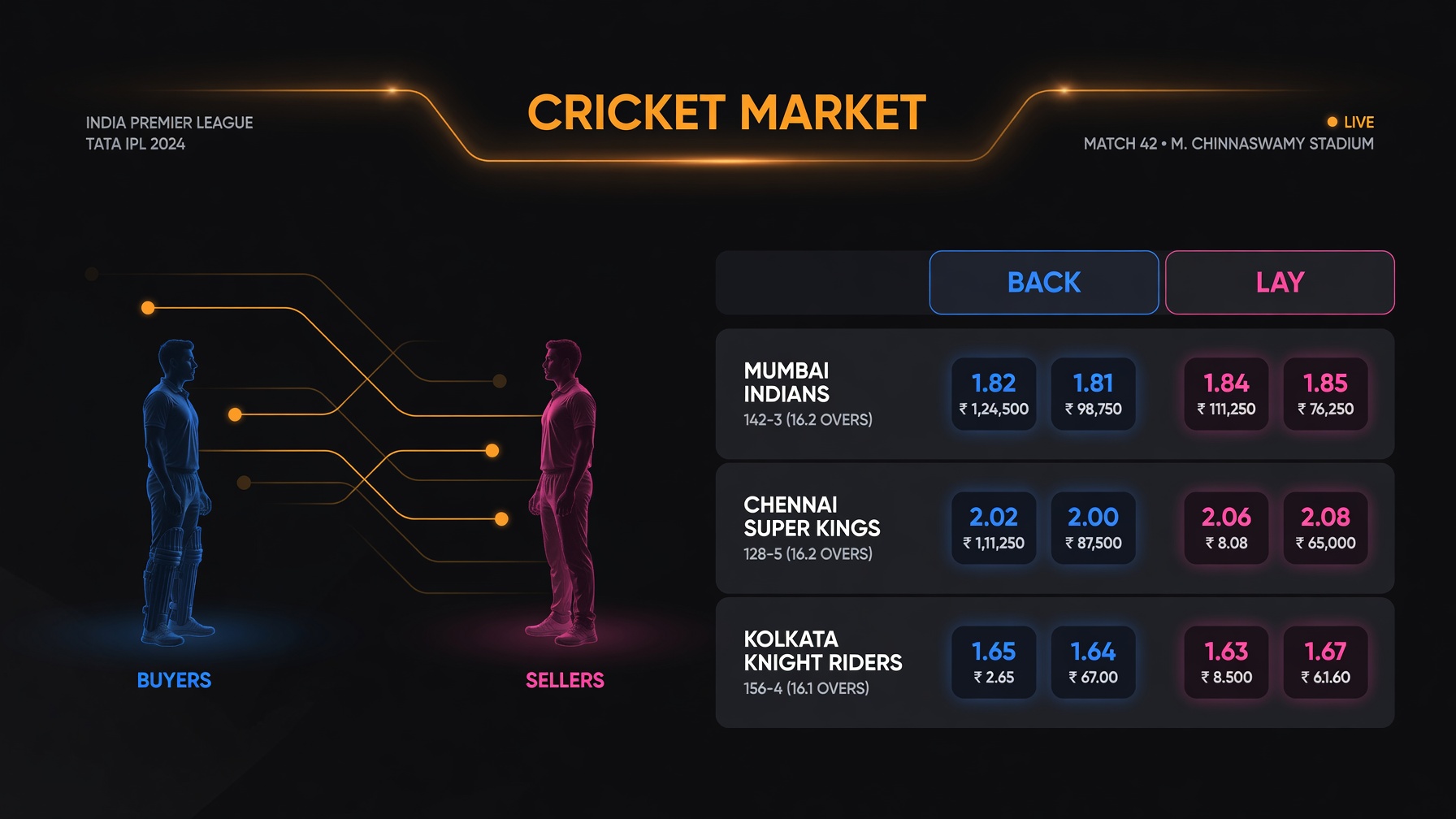
If you have only ever used a traditional bookmaker, a betting exchange can feel like a different world. The good news is that the core idea is simple, and once it clicks, everything else falls into place. This guide explains what an exchange is, how the two key actions — backing and laying — work, and where the odds actually come from.
What is a betting exchange?
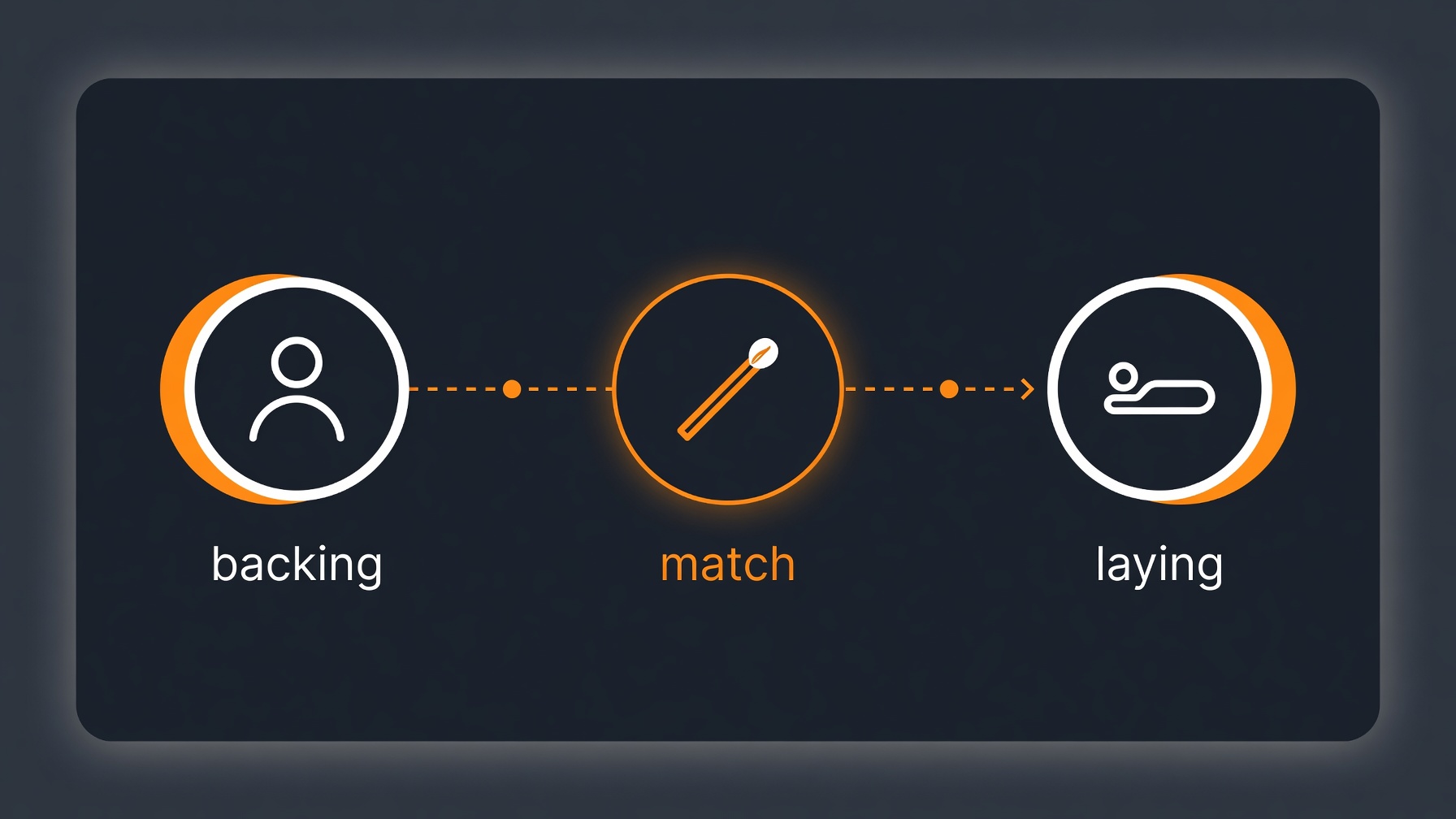
A betting exchange is a marketplace where people bet against each other rather than against a company. Think of it like a stock market, but for sporting outcomes. One person wants to bet that something will happen; another wants to bet that it won't. The exchange matches the two together and settles the result fairly once the event is over.
The platform itself does not set the odds or take a position. Its job is to run the marketplace, match opposing bets, and keep the money safe until the outcome is known. Because the prices come from real bettors rather than a single company protecting a margin, they often reflect the true market view of a match more closely.
Back and lay: the two building blocks
There are only two actions you need to understand on an exchange. Master these and you understand the whole system.
Backing — betting for something
To back a selection is to bet that it will happen. Back India to beat Australia and you win if India win. This is exactly the kind of bet you already know from a bookmaker: you choose an outcome, stake an amount, and collect if you are right.
Laying — betting against something
To lay a selection is to bet that it will not happen. In effect, you become the bookmaker for that outcome. Lay India and you win if India do not win. The trade-off is that you accept a liability: if the thing you laid does happen, you pay out. Laying is the feature a traditional bookmaker simply does not offer, and it is what makes an exchange so flexible. If you want a deeper look at when each makes sense, see our guide on back bet vs lay bet in cricket.
Where do the odds come from?
On an exchange, odds are not handed down by a company. They are created by supply and demand. If lots of people want to back a team, the available price shortens; if lots want to lay, it drifts. What you see on screen is the best price currently on offer from other users. When you accept it, your bet is matched. If you would rather wait for a better number, you can ask for it and your bet sits unmatched until someone takes the other side — a process we cover in matched vs unmatched bets.
Those odds are shown in decimal format, which makes returns easy to calculate. If you are new to reading prices, our beginner guide on how to read cricket betting odds walks through it step by step.
How does the exchange earn money?
Since the platform does not bet against you, it usually earns a small commission on net winnings instead of building a margin into the odds. This is an important honesty point: an exchange is not a way to "beat the house", because there is no house taking the other side of your bet. You are trading with other people, and skill, discipline and research still decide your results over time.
A simple cricket example
Imagine a T20 match. You think the chasing team is well placed, so you back them at decimal odds of 2.0 with a ₹500 stake. If they win, you receive ₹1,000 back (₹500 profit). Now imagine a friend disagrees and lays the same team — they win your ₹500 stake if the chasing team loses, but must cover your profit if it wins. The exchange simply matched your two opposing views and will settle whoever is correct.
Key takeaways
- A betting exchange matches bettors against each other, not against a company.
- Back = bet for an outcome; lay = bet against it.
- Odds come from real supply and demand and are shown in decimal format.
- The platform typically earns a commission, not a built-in margin.
- An exchange gives flexibility, but no system removes risk.
Betting involves risk and is for adults only. There is no such thing as a guaranteed win. Only stake what you can comfortably afford to lose, and treat betting as entertainment rather than income.
See an exchange in action
The clearest way to understand backing and laying is to explore real markets. Learn more about how it all fits together on the FairPlay home page.
Explore FairPlay